MacBook Pro M5 vs M6: What's Different & Should You Upgrade?
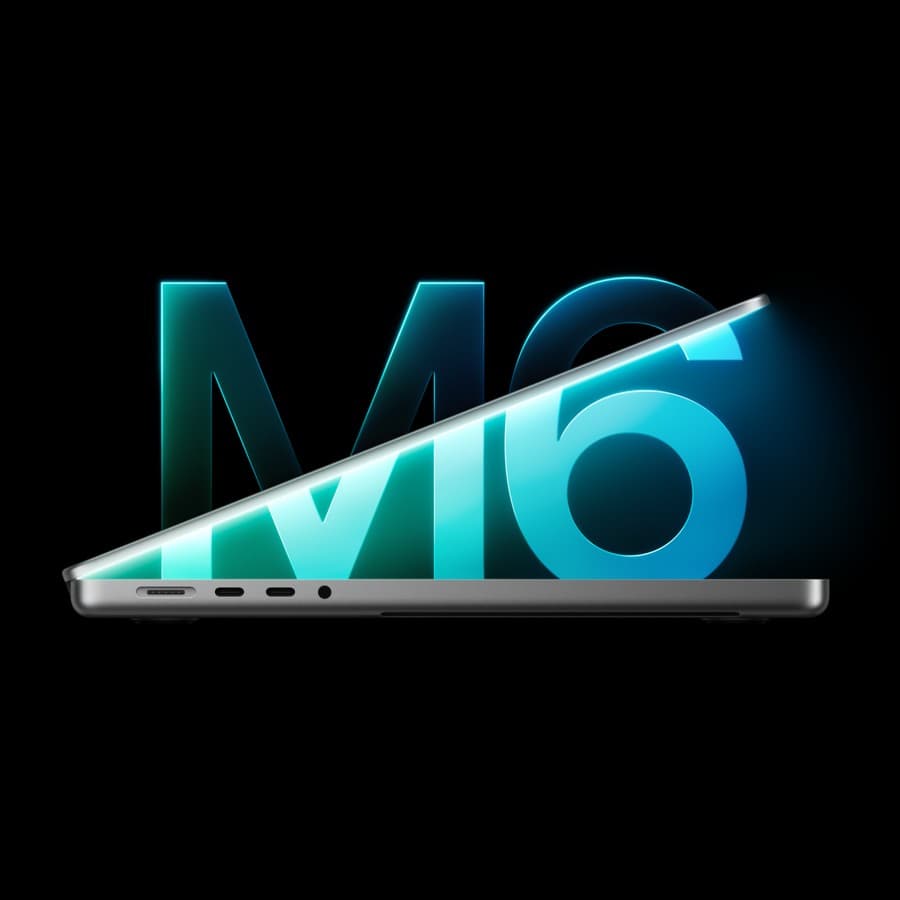
In October 2026 Apple refreshed its most popular pro laptop with a new chip, the M6, replacing the M5 that launched a year earlier. On paper it looks like a routine annual bump. In practice the M6 is one of the more meaningful mid-size MacBook Pro updates in recent memory — and whether it's the right machine for you depends entirely on what you do and what you're coming from. This is the complete breakdown: the architecture, the performance, the trade-offs, and the honest buying advice for Kenya.
We'll cover what actually changed at the chip level, what those changes mean in real applications rather than marketing slides, who should upgrade and who shouldn't, and how to buy either model sensibly in Kenya — including trade-in and payment.
Chip architecture: what moving to 2-nanometre really changes
The M5 is built on a 3-nanometre manufacturing process; the M6 moves to a denser 2-nanometre process. "Nanometre" here is shorthand for how tightly Apple can pack transistors. A smaller process means more transistors in the same space, which translates into two things at once: more performance for the same power draw, and the same performance for less power. That dual benefit is why a 2nm chip can be meaningfully faster while keeping the same 24-hour battery rating.
Apple used that transistor budget to widen the chip. The M6 goes from 10 to 12 CPU cores and from 10 to 12 GPU cores, and upgrades the Neural Engine to a dual 16-core design. The figures Apple quotes are up to 30% faster graphics and up to 25% faster on-device AI versus the M5. Those are best-case numbers, but even a conservative read puts the M6 comfortably ahead in anything that scales across cores.
MacBook Pro M5 vs M6: full specification comparison
| Specification | MacBook Pro M5 | MacBook Pro M6 |
|---|---|---|
| Launched | Late 2025 | October 2026 (ships 6 Nov) |
| Process node | 3-nanometre | 2-nanometre |
| CPU cores | 10 | 12 |
| GPU cores | 10 | 12 |
| Graphics performance | Baseline | Up to 30% faster |
| Neural Engine | 16-core | Dual 16-core, up to 25% faster AI |
| Unified memory | 16GB, up to 32GB | 16GB, up to 32GB |
| Storage | 1TB, up to 4TB | 1TB, up to 4TB |
| Display | 14.2" Liquid Retina XDR, 120Hz, up to 1600 nits | Same, with nano-texture option |
| Battery | Up to 24 hours | Up to 24 hours |
| Wireless | Wi-Fi 6E, Bluetooth 5.3 | Wi-Fi 7, Bluetooth 6 |
| Colours | Space Black, Silver | Space Black, Silver |
CPU performance: what the two extra cores do
The M6's two additional CPU cores matter most for work that runs many threads at once. If you compile code, the difference shows up directly as shorter build times in Xcode, faster dependency installs, and snappier behaviour when you're running an app, a simulator and a container at the same time. If you work with large spreadsheets, databases or virtual machines, the extra cores give you more headroom before the machine feels busy. For single-threaded tasks — most everyday app interactions — the gap is smaller, because those lean on one or two cores and both chips are already extremely fast there.
Graphics: the 30% uplift, and where you'll feel it
The GPU is where the M6 pulls clearly ahead. The quoted 30% improvement is the kind of gain you feel in timeline scrubbing and exports in Final Cut Pro and DaVinci Resolve, in 3D viewport performance and final renders in Blender and Cinema 4D, and in effects-heavy work in Photoshop and After Effects. For gaming it means higher, steadier frame rates in demanding titles. If graphics throughput is part of how you earn money — video, motion, 3D, visualisation — this is the single most important reason to choose the M6 over the M5.
AI and the Neural Engine: the real reason the M6 exists
The quietest change is arguably the most forward-looking. The M6's faster dual 16-core Neural Engine runs on-device AI — Apple Intelligence writing tools, image generation, smarter Siri, live transcription and the features Apple keeps adding — with noticeably less lag than the M5. More importantly, it buys headroom: on-device AI models grow larger every year, and a faster Neural Engine today keeps the machine comfortable with those features for longer. If you expect to lean on AI tooling over the next three to four years, the M6 is the safer long-term bet.
Memory, storage and what stayed the same
Both chips offer 16GB of unified memory as standard, up to 32GB, with storage from 1TB to 4TB. For most professionals 24GB is the sweet spot; heavy video and 3D users should look at 32GB. Beyond the chip, the M6 keeps the excellent 14.2-inch Liquid Retina XDR display (ProMotion up to 120Hz, up to 1600 nits HDR, optional nano-texture glass for glare), the aluminium chassis, the 12MP Center Stage camera, the six-speaker sound system, and the up-to-24-hour battery. None of that is a weakness — it's a mature, class-leading design that didn't need changing.
Connectivity: Wi-Fi 7 and Bluetooth 6
The M6 adds Wi-Fi 7 and Bluetooth 6. On a compatible router Wi-Fi 7 brings higher throughput and lower latency — useful for large transfers to a NAS, cloud backups and video calls on a busy network. Bluetooth 6 improves accessory reliability and power efficiency. Neither is a headline reason to upgrade alone, but together they future-proof the wireless stack for the years you'll own it.
Benchmarks and realistic expectations
Independent numbers will settle in the weeks after launch, but the shape is predictable: expect roughly double-digit multi-core CPU gains, around a 30% GPU lift in sustained graphics, and the largest percentage gains in AI tasks. Crucially, in everyday use — browsing, writing, email, light photo edits, video calls — you'll struggle to tell the two apart, because neither chip is the bottleneck.
Should you upgrade? Detailed scenarios
Coming from Intel, M1 or M2: Upgrade without hesitation. The jump in speed, battery, display and quiet operation is transformative, and the M6 will stay current for years. A trade-in narrows the cost.
Coming from M3 or M4: Upgrade only if you're constrained today — long exports, slow renders, heavy AI. Otherwise the gains won't justify the cost yet.
Coming from the M5: For most people, no. The M5 is barely a year old and remains outstanding. The exception is professionals whose income depends on graphics or AI throughput, where 20–30% compounds over hundreds of hours.
First pro Mac: If you want the longest useful life and do demanding work, buy the M6. If budget is the priority, the M5 gives you almost all of the experience for less.
Student or everyday user: Seriously consider the lighter, cheaper MacBook Air M5 first — for notes, research, browsing and media it does everything most people need.
Value analysis: is the M6 worth the premium?
The M6 launches at the same starting price the M5 holds, which makes the decision cleaner: buying new at full price, the M6 is the better value because you get a newer, faster chip for the same money. The M5 becomes the smart buy when it's discounted, available immediately, or offered with a strong trade-in. Pay for the M6 if you'll use the extra graphics and AI power; save with the M5 (or the Air) if you won't.
Buying the MacBook Pro M5 or M6 in Kenya
At iTey Store the MacBook Pro M5 is available now from KSh 260,000, and the new MacBook Pro M6 is listed from KSh 285,000 — check its product page for current stock. Every unit is brand-new, factory-sealed and never activated, with warranty and an official Kenyan tax receipt. That matters: grey-market imports can look cheaper up front but often cost more later when warranty, repairs or authenticity become a problem. Compare the full line on the MacBook price list for Kenya, pay with M-Pesa, Visa, Mastercard or bank transfer, get same-day Nairobi delivery or collect at Cookie House, Accra Road, and trade in your old MacBook to reduce what you pay.
The verdict
The M6 is the better laptop in every measurable way — faster CPU, markedly faster graphics, a stronger Neural Engine and newer wireless — while keeping everything that made the 14-inch MacBook Pro great. But "better" isn't the same as "worth upgrading." If you're on an older Mac, or your living depends on graphics and AI performance, the M6 is the clear choice and will serve you for years. If you're on a recent Mac, or your work is everyday, the M5 (or the MacBook Air M5) will still delight you and leave money in your pocket. Buy the capability you'll actually use.
Frequently Asked Questions
What is the difference between the MacBook Pro M5 and M6?
The M6 uses a newer 2nm chip with 12 CPU and 12 GPU cores (versus 10 and 10 on the M5), up to 30% faster graphics, up to 25% faster on-device AI via a dual 16-core Neural Engine, and adds Wi-Fi 7 and Bluetooth 6. The display, chassis, camera and 24-hour battery are unchanged.
Is the MacBook Pro M6 worth it over the M5?
For heavy video, 3D, development and AI work, yes. For everyday use and lighter creative work, the M5 remains excellent and the better value — most people won't feel the difference.
Is the M6 faster than the M5?
Yes — expect double-digit multi-core CPU gains, around 30% in sustained graphics, and the biggest gains in AI. In everyday use they feel nearly identical because neither is the bottleneck.
Does the MacBook Pro M6 have a new design or display?
No — it keeps the 14.2-inch Liquid Retina XDR display and the same chassis as the M5. The upgrade is the chip and wireless, not the body.
How much is the MacBook Pro M6 in Kenya?
At iTey Store it is listed from KSh 285,000; the M5 starts at KSh 260,000.
Should I buy the M5, M6 or the MacBook Air M5?
Choose the M6 for the most performance and longevity, the M5 for a near-identical experience at a lower price, and the MacBook Air M5 if you want a lighter, cheaper laptop for everyday tasks.
Can I pay with M-Pesa or trade in my old MacBook?
Yes to both. iTey Store accepts M-Pesa, Visa, Mastercard and bank transfer, and takes trade-ins to lower what you pay, with same-day Nairobi delivery.
Ready to buy?
Same-day delivery in Nairobi. Genuine products. Manufacturer warranty.
Get price drops on WhatsApp
New stock, real price drops, and early access to pre-orders. A few messages a month — never daily spam.