Apple Glasses: Apple's Rumored AI Smart Glasses to Rival Ray-Ban Meta — Everything We Know
Apple spent nearly a decade and reportedly billions of dollars building toward Vision Pro — a $3,499 mixed-reality headset that launched in 2024 to genuine technical acclaim and modest sales. Since then, reporting suggests Apple has quietly shifted its AR strategy: rather than continuing to push expensive, bulky headsets, the company is said to be prioritizing a much lighter product — AI-powered smart glasses, positioned to compete directly with Meta's Ray-Ban line. Unofficially called "Apple Glasses," this product is still early, thin on confirmed detail, and reportedly not expected before late 2027.
We want to be upfront about how early-stage this rumor is. Unlike the iPhone 18 or even the MacBook Ultra, there is very little concrete leaked information about Apple Glasses yet — what exists is mostly reporting about Apple's strategic direction (pausing further headset development to focus on glasses) plus a couple of specific design details. Treat everything here as an early snapshot of a product that is still more than a year from any expected launch, not a spec sheet.
Why Apple Is Reportedly Moving from Headsets to Glasses
Vision Pro proved Apple could build genuinely impressive spatial computing hardware — sharp displays, capable eye and hand tracking, real software polish. What it didn't prove was that people want to wear a $3,499 ski-goggle-sized headset around the house or office for hours at a time. Meta, meanwhile, has had real commercial success with a much simpler idea: normal-looking Ray-Ban glasses with a camera, speakers, and an AI assistant built in — no display, no headset bulk, a fraction of the price. Reporting indicates Apple has taken note, pausing further AR/VR headset development to instead build something closer to that category.
What's Actually Been Reported So Far
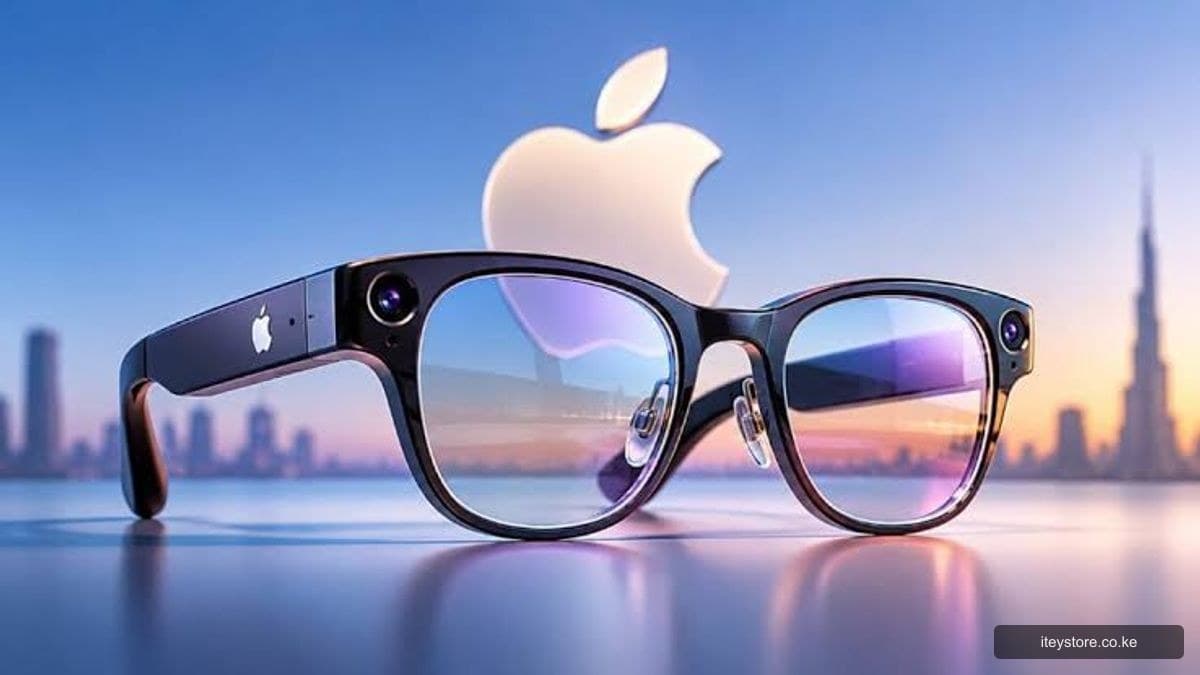
Confirmed leaks are limited to two specific details: oval-shaped cameras built into the frame, and custom, non-generic frame designs (rather than a single one-size-fits-all shape). Beyond that, most of what's discussed publicly is informed extrapolation from Apple's broader AI and wearables strategy, not confirmed specification. We're not going to invent detail that hasn't leaked — if you see a post elsewhere claiming exact battery life, display specs, or pricing for Apple Glasses, treat it with real skepticism at this stage.
How It's Expected to Compare to Ray-Ban Meta
| Ray-Ban Meta (available today) | Apple Glasses (rumored) | |
|---|---|---|
| Display | None on base model; Ray-Ban Display adds a small display | Unconfirmed |
| Camera | Yes — photo/video capture | Rumored — oval-shaped cameras in the frame |
| AI assistant | Meta AI built in | Expected to lean on Apple Intelligence/Siri, unconfirmed |
| Frame design | Standard Ray-Ban shapes | Rumored custom, non-generic frame options |
| Expected launch | Available now | Late 2027 (rumored) |
Smart Glasses Have Failed Before — What's Different Now
It's worth remembering this isn't the industry's first attempt at camera-equipped smart glasses. Google Glass launched in 2013 with a camera, a heads-up display, and voice control — and collapsed within two years, partly on functionality but largely on social backlash. People wearing an always-on camera on their face in public earned the product a genuinely unflattering nickname ("Glasshole") and real public suspicion about being secretly recorded. That history is exactly why Ray-Ban Meta ships with a visible LED that lights up whenever the camera is recording — a direct, deliberate answer to the Google Glass backlash, not just a design detail. Any Apple product in this category would inherit the same trust problem and would need its own answer to it.
What's different now, a decade later: AI assistants are dramatically more capable and genuinely useful in a hands-free context (real-time translation, visual search, voice-driven tasks), camera and battery miniaturization have improved enormously, and — critically — Meta has already done the work of normalizing the category. Ray-Ban Meta glasses look like ordinary Ray-Bans, not obvious tech gadgets, and have sold well enough that Apple's reported strategy pivot away from headsets makes commercial sense. Apple would be entering a market Meta has already proven exists, rather than trying to create one from scratch the way Google did in 2013.
Where This Leaves Apple Vision Pro
Apple Vision Pro is real, shipping, and already sold at iTey Store in Kenya (KSh 595,000) — this isn't a rumor, it's today's product. Apple Glasses is not a replacement for Vision Pro; the two appear to be aimed at completely different use cases. Vision Pro is a full spatial computer — productivity in mixed reality, immersive video, spatial photos, and headline use cases like Apple Immersive Video. It's also already been used for genuinely serious professional work: surgeons have used Vision Pro paired with ScopeXR during real cataract surgery, a world-first application we've covered separately on the iTey blog. Apple Glasses, by contrast, is reportedly a much lighter, cheaper, more everyday wearable — closer to "glasses with a camera and an assistant" than "computer you strap to your face." If Apple ships both, they'd likely sit at opposite ends of Apple's wearable lineup rather than competing with each other.
The AI Angle: Why This Fits Apple's Bigger Strategy
Apple Glasses wouldn't just be a hardware play — it's reportedly tied to Apple Intelligence, Apple's on-device AI push across iPhone, iPad, and Mac. Glasses are arguably the most natural form factor for an ambient AI assistant: always available, hands-free, able to see what you see. That's precisely the pitch behind Meta AI on Ray-Ban glasses — ask it what you're looking at, get real-time translation, hands-free voice commands. If Apple is serious about competing here, expect deep Siri/Apple Intelligence integration to be the actual selling point, with the glasses themselves as the delivery vehicle rather than the headline feature.
What Would It Cost?
Nothing has leaked on pricing. Meta's Ray-Ban glasses — the product Apple is reportedly targeting — start at a few hundred dollars, a fraction of Vision Pro's KSh 595,000 Kenya price. If Apple is serious about competing in that category rather than just adding a cheaper Vision Pro accessory, a genuinely lower price point would make strategic sense — but that is reasoning about Apple's likely strategy, not a leak, and should be read that way.
Apple Wouldn't Be the Only Player
By the time Apple Glasses reportedly ships in late 2027, it won't be entering an empty field. Beyond Meta's Ray-Ban line, smaller players like Xreal and Even Realities have already been shipping AI/display glasses at various price points, and Google — the company that tried and abandoned this category once already with Google Glass — has been reported to be re-entering smart glasses via Android XR partnerships with eyewear brands. Apple's usual pattern is to enter a category late but with tighter hardware/software integration than anyone else (this is exactly how it approached smartphones, tablets, and smartwatches). Whether that playbook works as well in a category this socially sensitive — a camera you wear on your face — is a genuinely open question, not a given.
Would It Even Come to Kenya?
Worth being honest about this too: Apple Vision Pro's Kenya availability today is through specialist retailers like iTey Store rather than a local Apple Store presence, since Apple has no official retail or online store operating in Kenya. A brand-new product category like Apple Glasses, over a year from launch, has no confirmed global launch-market list yet, let alone confirmation it would reach Kenya on day one. If it follows the same pattern as Vision Pro and other new Apple categories, expect it to reach specialist Kenyan retailers sometime after its initial US/UK launch window, not simultaneously.
Frequently Asked Questions
What are Apple Glasses?
Apple Glasses is the unofficial name for Apple's rumored AI-powered smart glasses, reported to be in development as a lighter, cheaper alternative to Vision Pro, aimed at competing with Meta's Ray-Ban glasses line. Apple has not officially announced or named this product.
When will Apple Glasses launch?
Current reporting points to late 2027 at the earliest — over a year out from now, with very few confirmed specs. Apple has given no official date.
Will Apple Glasses replace Vision Pro?
No — they're reportedly aimed at different use cases. Vision Pro is a full spatial computer for mixed-reality productivity and immersive media; Apple Glasses is expected to be a much lighter, everyday wearable closer to Meta's Ray-Ban glasses. Apple Vision Pro remains available today at iTey Store in Kenya.
How much will Apple Glasses cost?
Unknown — no pricing has leaked. Given Apple is reportedly targeting the same market as Meta's sub-$400 Ray-Ban glasses, a price far below Vision Pro's KSh 595,000 would make strategic sense, but this is reasoning, not a confirmed number.
Will Apple Glasses be sold in Kenya?
Unconfirmed — Apple has no official retail presence in Kenya today, and Vision Pro reaches Kenyan buyers through specialist retailers rather than Apple directly. A brand-new product category over a year from launch has no announced market list yet.
Apple Vision Pro is available now at iTey Store — genuine, with full manufacturer warranty and same-day Nairobi delivery. We'll update this article as real Apple Glasses details are confirmed.
Ready to buy?
Same-day delivery in Nairobi. Genuine products. Manufacturer warranty.
Get price drops on WhatsApp
New stock, real price drops, and early access to pre-orders. A few messages a month — never daily spam.